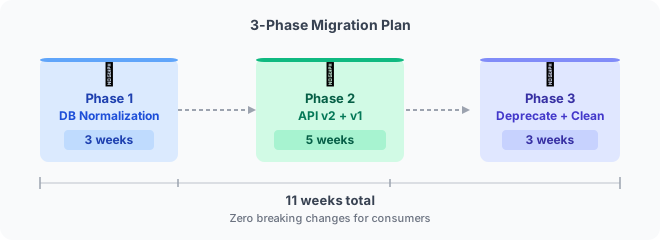
Planning a Database Migration with AI: 11 Weeks, 15 Questions
How I used an AI agent as a planning partner — not a code generator — to design a complex database migration before writing a single line.
Agentic engineering — from the trenches.
How I used an AI agent as a planning partner — not a code generator — to design a complex database migration before writing a single line.
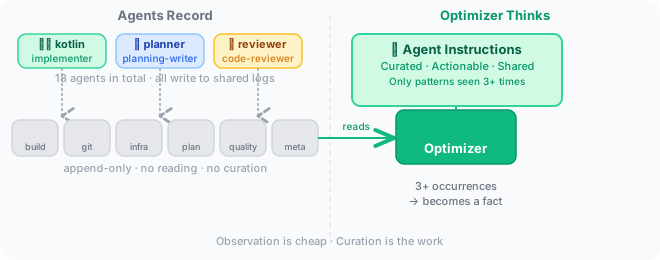
When 18 agents each maintained their own memory files, the system became unmaintainable. The solution was a philosophical split: separate data collection from knowledge curation.
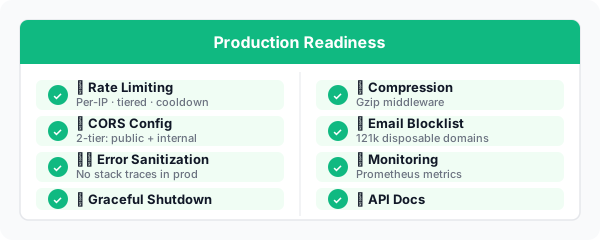
AI can build features fast. Making them production-ready is still slow, deliberate, and entirely your responsibility.
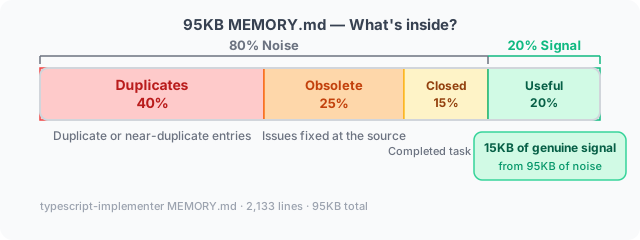
Two weeks in, my typescript-implementer's memory file was 95KB and 2,133 lines. The system designed to make agents smarter was making them slower.
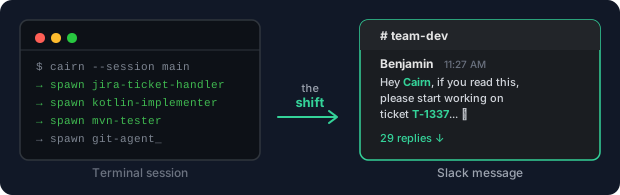
Session 13. A real ticket, a Slack message, and then I stepped away. What happened next wasn't what I expected.
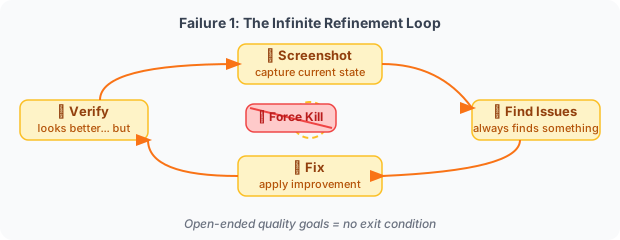
Nobody posts about their agents failing. I do. Four real failures from production multi-agent work and what I learned from each one.
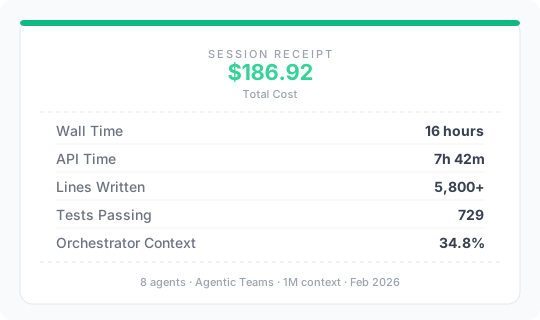
I ran 8 agents simultaneously for 16 hours to build a complete cashback campaign web app. Here's what the receipt says.
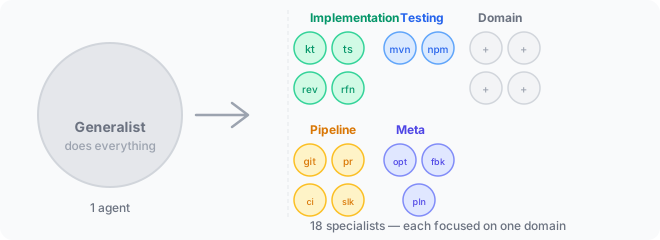
How I went from one generalist AI agent to 18 specialists in five intense days, and why specialization is the single most important architectural decision in agentic development.
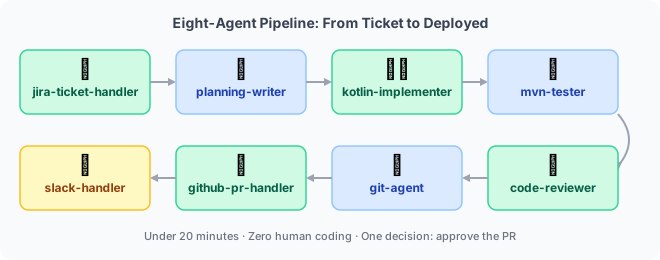
Session 9. A real production ticket at an enterprise company. Nine agents in sequence. I supervised. Here's what actually happened.
I asked my AI agent to choose its own name. It picked 'Cairn.' Here's why that matters more than it sounds.
Ready to level up?
Get in Touch